
In the wild: What is the ‘montanera’ and why is it important?
10 de October de 2018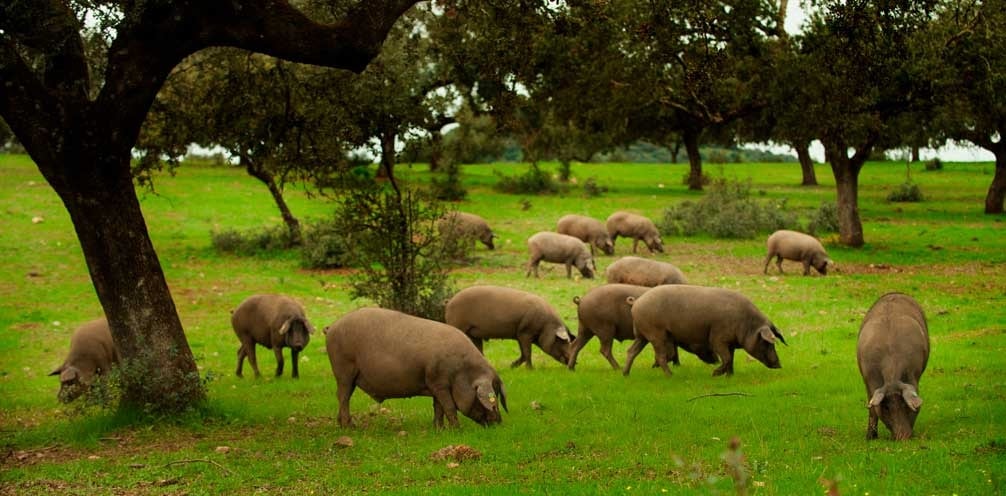
La Montanera
Every process comes to an end, and pig rearing is no exception. The term ‘montanera’ refers to the final stage of Iberian pig rearing and involves allowing the pigs to graze freely in the dehesa, where they gain weight by feeding on acorns from holm oaks, cork oaks and other trees of the Quercus family.
Este período se extiende de octubre a febrero, coincidiendo con el período óptimo de maduración de la bellota. Si la temporada de lluvias ha sido generosa en aguas, los cerdos pasarán el día caminando sobre una superficie irregular repleta de bellotas y pastos frescos.
This period runs from October to February, coinciding with the optimal ripening period for acorns. If the rainy season has brought plenty of rain, the pigs will spend the day roaming over uneven ground strewn with acorns and fresh grass.
It is worth noting that the importance lies not only in their diet, but also in the daily exercise they get. As they are free-range, the pigs cover around 12–15 km a day. This gives their meat a higher quality, as the fat marbles into the lean meat as they put on weight.
Why is it important?
Did you know that during the montanera, Iberian pigs can eat between six and ten kilos of acorns and one kilo of fresh grass a day?
This type of diet influences the flavour and texture of the hams, as well as the fatty acid profile of acorn-fed ham. In fact, acorn-fed ham is the only meat product that provides us with oleic acid, which is so beneficial for our cardiovascular health.
Acorns, which contain almost as much oleic acid as olives, enable healthy fatty acids to accumulate within the muscles of 100% Iberian acorn-fed ham. It is these very special fatty acids that allow the ham to undergo its subsequent, almost magical transformation in natural drying rooms, a process that can last up to five years in some cases.
If it weren’t for the montanera season, there would be no 100% Iberian acorn-fed ham. The animals’ diet would consist solely of cereals and more or less industrial feed, and as a result, the meat would be of lower quality, as it would not possess the healthy nutritional profile derived from acorns.
During the montanera, our Iberian pigs live peacefully, roaming the dehesa and enjoying a plentiful diet. This process results in products of excellent quality, such as the acorn-fed Iberian ham that we offer in our shops and online at Reserva Ibérica.
What are you waiting for? Why not give it a go?